Atp Is Expended in Which of the Following Cellular Processes
Cellular respiration is an important process by which energy is derived by the cells through several cellular processes like glycolysis Krebs cycle ETC by which the food energy is converted into ATP. The energy stored in 36 ATP molecules produced by aerobic respiration is 39 of the energy available in a six-carbon glucose and the other 61 of the glucose bond energy is lost.

Atp And Biological Energy
Active transport of a protein across a membrane B.

. By Anthony P. Energy from ATP is used to promote three major categories of cellular functions. Group translocation active transport facilitated diffusion diffusion both active transport and group translocation Question 12 Some bacteria have an outer layer called a ________ which allows them to adhere to surfaces and contributes to their ability to cause disease.
B and C will still be produced. In general the process of aerobic cellular respiration is. This happens when electrons are passed along the chain from protein complex to protein complex until they are donated to oxygen forming water.
Question 11 ATP is expended in which of the following processes. It is believed to be the neurotransmitter responsible for the sensation of taste. - ATP required - substance being transported is chemically altered - glucose enters the transport protein and is phosporylated becoming glucose-6-phosphate cant leave the cell.
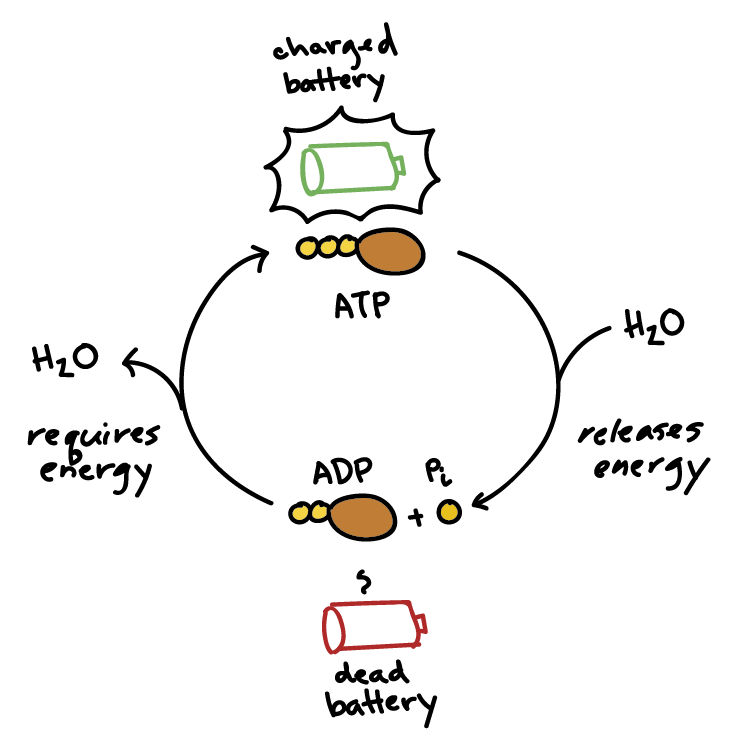
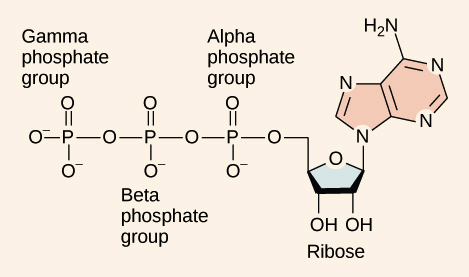
The breakdown of ATP to release the stored energy is known as ATP hydrolysis. ATP provides energy needed to carry out many cellular functions. In addition to metabolic functions ATP is involved in signal transduction.
In reality the total ATP yield is usually less ranging from one to 34 ATP molecules depending on whether the cell is using aerobic respiration or anaerobic respiration. ADP is in turn used to synthesize ATP. A facilitated diffusion B diffusion C group translocation D active transport E both active transport and group translocation.
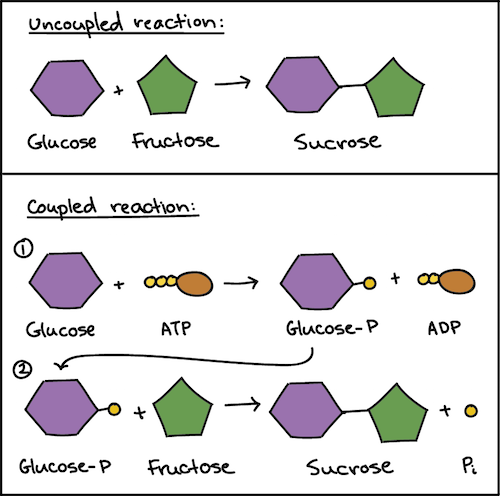
Thus some energy must be invested to make the molecule unstable and begin the. Two ATP molecules are expended in the energy investment phase of glycolysis. Passive transport of oxygen across a cell membrane D.
ATP is a high energy nucleotide which acts as an instant source of energy within the cell. In which of the following process 36 ATP molecules are produced by per hexose molecule. B C and D will all still be produced.
Which of the following processes does NOT require ATP. Muscles constantly generate protons during basic cellular metabolism whether you are at rest or in an activity. The body manages the hydrogen ions easily during rest or light activity by moving them to the mitochondria of the cells where the energy is harnessed to resynthesize ATP with.
ATP is required for. Cellular respiration is the process by which organic compounds preferably glucose are broken apart releasing energy that is used to produce ATP molecules. ATP is expended in which of the following processes.
The human central and peripheral nervous system in particular relies on ATP signaling. The respiration of an 18-carbon. Biology questions and answers.
15 ATP is expended in which of the following processes. ATP is required for. A Glucose is a stable molecule.
And by laundromat I mean your body. A facilitated diffusion B group translocation C active transport D diffusion E both active transport and group translocation answer. Energy is released during cell metabolism when ATP is hydrolyzed.
ATP is the energy currency of a cell produced by the destruction of ADP expended in the process of photosynthesis produced during the phosphorylation of any organic compound Anything that prevents ATP formation will most likely result in cell death. 1 transport of substances through multiple membranes in the cell 2 synthesis of chemical compounds throughout the cell and 3 mechanical work. ATP chemically decomposes to adenosine diphosphate ADP by reacting with water.
This process can take place in the presence or absence of oxygen to facilitate the aerobic and anaerobic organisms. Making more ATP C. In the enzyme-catalyzed reaction where A Enzyme 1.
Why is this energy necessary to begin the process of glucose catabolism. ATP is used in the formation of macromolecules. D what will be the effect of inactivating Enzyme 2.
Cells need to have ATP because its the gasoline that powers all living things. ATP is also added to nucleic acids during transcription. In eukaryotic cells some energy is expended to transport intermediates from the cytoplasm into the mitochondria affecting ATP yield.
ATP is expended in which of the following processes. During which cellular process is ATP NOT released. A facilitated diffusion B diffusion C group translocation D active transport E both active transport and group translocation.
Macromolecules are converted into cell structures via catabolism Sulfanilamide is an antimicrobial drug that mimics the shape of an important substrate for a particular bacterial enzyme thereby inhibiting the enzyme.
2
Ijms Free Full Text Look Who Rsquo S Talking Host And Pathogen Drivers Of Staphylococcus Epidermidis Virulence In Neonatal Sepsis Html
Intracellular Thermometry Uncovers Spontaneous Thermogenesis And Associated Thermal Signaling Communications Biology

Bio 213 Chapter 3 Cell Biology Biology Quiz Quizizz

Atp And Biological Energy
Progress In Systems Based Analysis Of Cellular Signalling Drug Discovery World Ddw

Pin On Ecobiohub
Atp Cycle And Reaction Coupling Energy Article Khan Academy

Protein Tyrosine Phosphatase Receptor D Serves As The Orexigenic Asprosin Receptor Sciencedirect

Where Does The Enteric Nervous System Fit In The Ans Google Search Enteric Nervous System Neurological Disorders Peripheral Nervous System

4 15 Na K Pump Make Flash Cards Biochemistry Notes Plasma Membrane

The Cell High School Biology High School Biology Plant And Animal Cells Cell Structure
Atp Cycle And Reaction Coupling Energy Article Khan Academy

Role Of Melatonin In Promoting Plant Growth By Regulating Carbon Assimilation And Atp Accumulation Sciencedirect

Various Atp Regeneration Systems For In Vitro Protein Expression A Download Scientific Diagram
2

In Silico Media Optimization For Continuous Cultures Using Genome Scale Metabolic Networks The Case Of Cho K1 Perez Fernandez 2021 Biotechnology And Bioengineering Wiley Online Library
Atp Cycle And Reaction Coupling Energy Article Khan Academy

Biology Free Full Text Optimal Biomechanical Performance In Upper Limb Gestures Depends On Velocity And Carried Load


Comments
Post a Comment